welcome to one earth sequestration
Protecting Our Environment for Future Generations.
Featured Resource
Illinois comprehensive climate action plan
About the Project
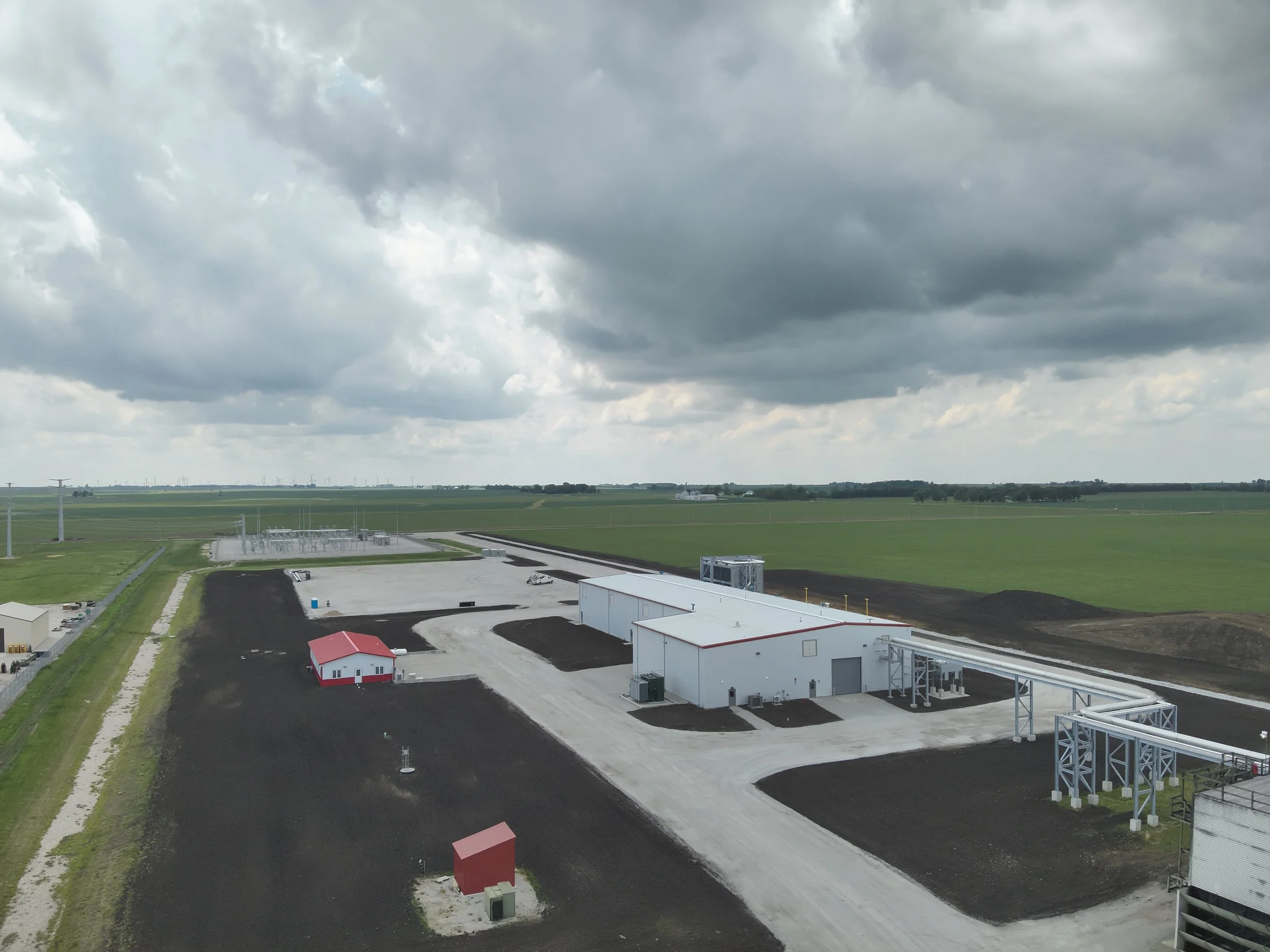
One Earth Sequestration (OES) is a proposed carbon capture and storage (CCS) project developed in partnership with One Earth Energy (OEE), a leading ethanol producer in central Illinois. Together, we are working to reduce greenhouse gas emissions, support local agriculture, and strengthen Illinois’ leadership in clean‑energy innovation.
Carbon dioxide will be captured directly from the fermentation process at the OEE ethanol plant — a natural byproduct released when yeast converts corn sugars into ethanol. Fermentation CO₂ is biogenic — produced from natural biological processes — and would normally be released to the atmosphere. OES will compress the CO₂ into a supercritical fluid and inject it more than 6,000 feet underground into stable geologic formations for permanent storage.
By capturing fermentation CO₂ at the source, OES helps reduce the carbon footprint of ethanol, supports sustainable farming practices, and promotes a cleaner environment for future generations.
Why Carbon Storage Matters
Greenhouse gases like carbon dioxide are the primary drivers of climate change. Long-term monitoring by NASA and other scientific agencies shows a clear upward trend in atmospheric CO₂ levels.
Carbon capture and storage offers a practical, science-based solution:
Capture CO₂ at the source
Compress it into a dense, supercritical fluid
Transport it safely
Inject it deep underground into secure geologic formations
CCS is a proven, safe, and effective technology used around the world. The OES project supports Illinois’ climate goals and helps make ethanol production more sustainable
Project Benefits

The One Earth Sequestration (OES) project will deliver major environmental, economic, and community benefits for central Illinois and beyond.
Environmental Benefits
OES will capture 618,000 metric tons of CO₂ annually — the equivalent of removing 144,000 gasoline-powered passenger vehicles from the road for one year. That’s nearly every registered vehicle in McLean County, Illinois.
This provides cleaner air and supports long‑term environmental health
Clean Fuel Innovation
Enables production of low-carbon ethanol and sustainable aviation fuel (SAF)
Helps achieve a carbon intensity (CI) rating of 60, improving market competitiveness
Supports Illinois’ leadership in clean fuel development
Agricultural Benefits
Supports local corn growers
Expands markets for ethanol, distillers grains, and corn oil
Strengthens rural economic resilience and keeps value-added processing local
Economic Benefits
One Earth Energy is completing a major expansion of its Gibson City ethanol facility to approximately 200 million gallons of annual production capacity. Most of the expansion has been constructed, with remaining work progressing toward completion. At full operation, the expanded facility is expected to increase the use of locally grown corn and support additional employment, business spending, and tax revenue.
The related One Earth Sequestration project is being developed to capture fermentation CO₂ from the expanded ethanol facility and permanently store it in deep geologic formations.
Strategic Economic Research evaluated the combined economic effects of the One Earth Energy expansion and the One Earth Sequestration carbon capture and storage project. The analysis estimates that the combined projects will:
• Represent approximately $220 million to $230 million in capital investment
• Support approximately 252 construction jobs
• Support approximately 70 direct ongoing operating jobs
• Support approximately 521 long-term jobs in Ford and McLean Counties
• Support approximately 1,180 long-term jobs statewide
• Generate approximately $37.1 million in local property-tax benefits
• Support the annual purchase of approximately 66 million bushels of corn, valued at approximately $346 million
These estimates describe the combined economic effects of the ethanol-facility expansion and the carbon capture and storage project. They are not impacts attributable solely to the proposed pipeline or sequestration facilities.
Planned Project Activities
OES has worked closely with the Illinois State Geological Survey (ISGS) and the U.S. Department of Energy to evaluate and prepare the proposed sequestration site. Key activities include:
Geologic Site Characterization
Stratigraphic test well drilling
Core sampling
Seismic data analysis
Evaluation of the Mt. Simon Sandstone reservoir
Assessment of the Eau Claire Formation as a confining layer
Pipeline and Injection Infrastructure
Planning for a CO₂ pipeline from One Earth Energy to the injection wells
Survey mapping of the proposed route
Identification of infrastructure crossings
Planning for two injection wells and multiple monitoring locations
Environmental and Technical Planning
Development of a monitoring strategy
Environmental sampling
Coordination with geoscientists, engineers, and reg
Transition to Safety & Emergency Response
As project planning advances, OES is working closely with local fire departments, hospitals, emergency management officials, and state agencies to ensure community safety. Activities include:
Emergency responder training
Safety equipment procurement
Development of a comprehensive Emergency Response Plan
Ongoing coordination with local, state, and federal partners
Learn more on our Safety & Emergency Response page.
Explore the Site
Home – Welcome to One Earth Sequestration
Carbon Storage – How geologic storage works and why it’s safe
Project Benefits – Timeline, infrastructure, environmental sampling, and economic impact
Safety & Community – Safety planning, responder training, community support, and outreach
News – Updates, newsletters, and project documents
Input – Submit comments and questions